
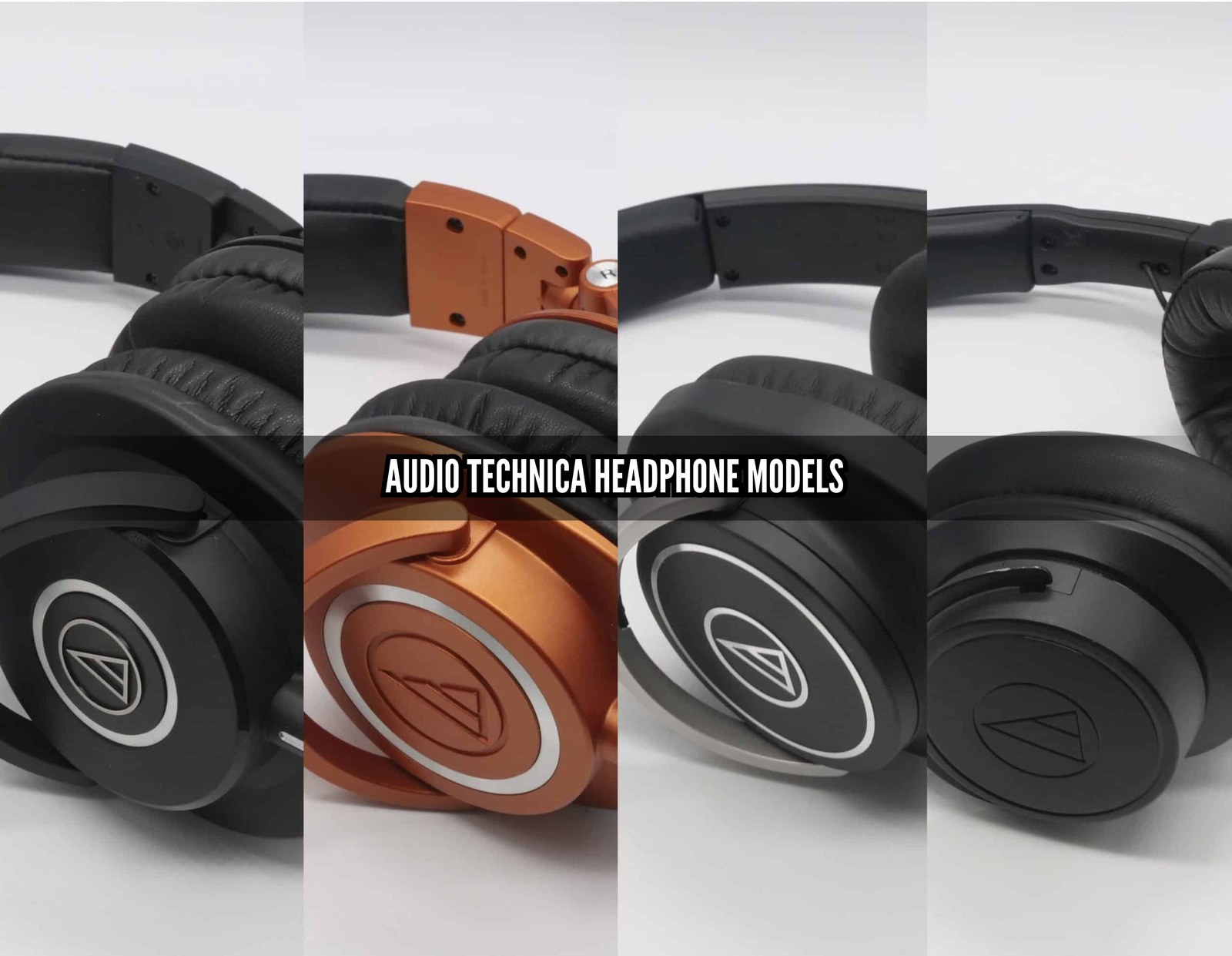
Understanding the Philosophy Behind Audio Technica Headphone Models
Audio Technica doesn’t chase consumer audio trends. Their entire approach to Audio Technica Headphone Models centers on a practical principle: different work requires different tools, and one design cannot honestly serve every purpose.
This philosophy explains why Audio Technica Headphone Models exist in genuinely separate categories with real trade-offs, not just different price points of the same basic design. Most brands blur this line. Audio-Technica keeps it sharp. That consistency is why studios and professionals have relied on Audio Technica Headphone Models for decades.
The average person shopping for headphones doesn’t think this way. They see closed-back and open-back, wired and wireless, and assume the difference is cosmetic. It isn’t. Once you understand what Audio Technica Headphone Models are actually built to do — not what they look like or how much they cost — the buying decision becomes straightforward.
Closed-Back Designs: Why the M-Series Remains Standard
The M50x is the model most people recognize. Its reputation is earned, though often for the wrong reasons.
The closed-back design isolates sound aggressively, which serves one purpose above all: preventing bleed into a microphone during recording. That’s why the M50x became the default for podcasters, voice talent, and recording engineers. But isolation isn’t its only feature worth discussing.
Audio Technica Headphone Models in the M-Series include intentional frequency shaping. The M50x has a presence peak in the upper midrange and a bass lift. This isn’t “coloration” in the way some reviewers frame it — it’s purposeful engineering. During a vocal tracking session, that midrange boost helps you hear the detail without volume fatigue. The bass lift prevents thin-sounding mixes on small monitors. For recording work, this tuning is actually an advantage because it reduces listener fatigue over long sessions.
That same tuning becomes a liability if you’re mixing. If you’re boosting the presence to begin with, you’ll naturally mix with less of it. Then that track sounds dull through neutral speakers. This is where the M40x enters the conversation. It’s flatter than the M50x — less presence peak, less bass boost. It sounds thinner on first impression, which is exactly why many overlook it. But among AudioTechnica Headphone Models for mixing, the M40x is the more honest choice because it doesn’t impose its signature onto what you’re hearing.
The practical distinction: recording or performing work benefits from the M50x. Critical mixing work demands the M40x. If you’re just beginning and budget matters, the M20x handles both jobs adequately, though its off-axis response isn’t as controlled as pricier Audio Technica Headphone Models.
| Model | Type | Best For | Sound Signature | Price Tier | Key Trade-Off |
|---|---|---|---|---|---|
| M50x | Closed-back | Recording, tracking vocals | Warm, presence peak, bass lift | Mid | Colored signature for mixing |
| M40x | Closed-back | Mixing, critical listening | Neutral, flat response | Mid | Thinner sound on casual listen |
| M20x | Closed-back | Budget entry, learning | Neutral-ish | Low | Less precise off-axis response |
| M60x | Closed-back | Tight bass control, tracking | Controlled, neutral | Mid | Less forgiving than M50x |
| R70x | Open-back | Mastering, mixing in quiet rooms | Flat, precise, wide soundstage | High | Zero isolation, sound leakage |
| AD700X | Open-back | Audiophile, casual critical | Warm, airy, musical | Mid-High | Still requires quiet room |
| AD900X | Open-back | Detailed listening, audiophile | Detailed, spacious, warm | High | No isolation, expensive |
| M50xBT2 | Wireless closed | Recording without cables | Matches M50x tuning | Mid-High | Slightly degraded codec quality |
| CKS50TW2 | True wireless | Portable music listening | Bass-forward, consumer | Mid | Not for professional work |
Open-Back Headphones: Where Isolation Actually Works Against You
This is where theory and real-world use diverge sharply.
Inside a closed-back earcup, sound waves bounce off the back panel before reaching your ear. These reflections create room modes and resonances — frequencies that ring slightly longer than they should. It’s subtle, but noticeable across a three-hour mixing session. Your ear works harder to separate the actual signal from the resonances, adding fatigue you don’t consciously recognize.
Open-back designs let sound escape freely. This eliminates closed-back resonances. The trade-off is absolute: zero isolation, complete sound leakage into your room. But sitting alone in a treated space with no background noise, an open-back headphone delivers a view of the recording closer to what it actually is.
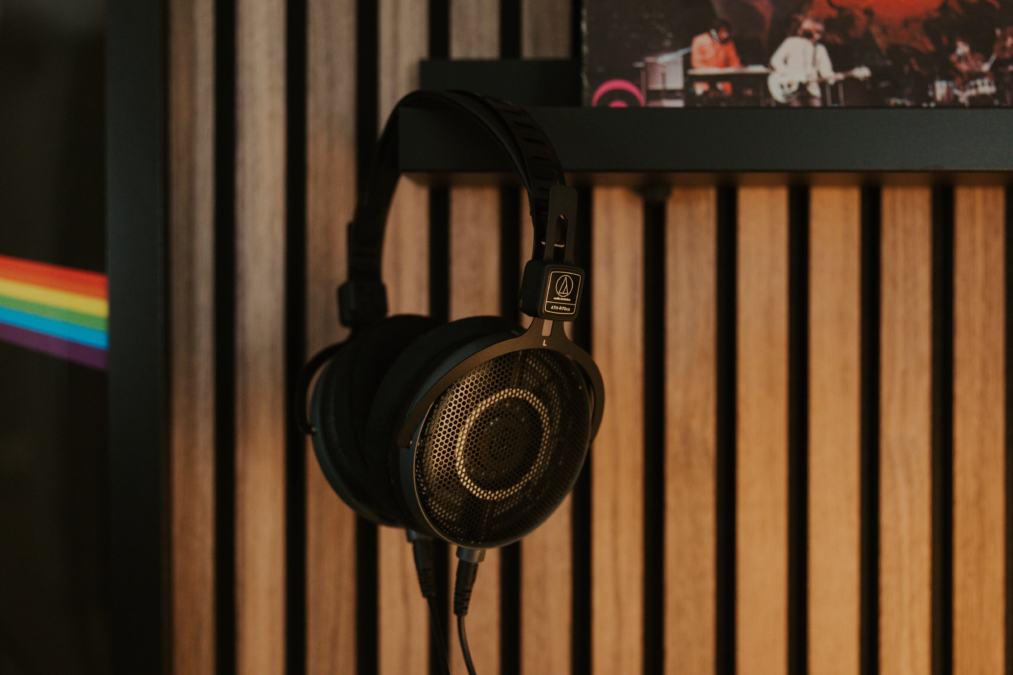
The ATH-R70x represents this approach without compromise. Audio Technica Headphone Models like the R70x use what the company calls a “large aperture open-back design” — essentially an open window at the back of the earcup. The frequency response is remarkably flat, and soundstage width is genuine because sound travels freely. Play it in a kitchen with background conversation, and you’ll understand immediately why open-back requires silence.
The ATH-AD series (AD700X, AD900X) represents a different point on the spectrum. These Audio Technica Headphone Models are open-back too, but with a tuned, less clinical character. They have air in the treble, warmer mids. They appeal to audiophile listeners wanting open-back advantages without mastering-grade flatness. They’re more forgiving on casual recordings, less punishing on poorly mixed tracks.
Real principle: if you’re not in a quiet, controlled environment, open-back headphones will frustrate you. It’s not design failure. It’s physics.
Wireless: Where Audio-Technica Solved the Cable Problem
For years, Audio-Technica’s wireless options felt like afterthoughts. The M50xBT2 changed that approach, representing genuine effort to preserve tuning across the Bluetooth transition.
The critical factor with wireless is codec choice. Most Bluetooth headphones use SBC (basic Bluetooth audio codec), which is low-bandwidth and introduces audible compression. Audio-Technica Headphone Models like the M50xBT2 support aptX and AAC codecs, closer to lossless at close range. Back-to-back comparison with the wired version shows the difference, but it’s smaller than the gap between SBC-only headphones and proper wired connections.
Multipoint pairing is functional, which still isn’t universal among expensive headphones from competing brands. For recording work, the wired M50x or M40x remains the right choice. For anyone wanting monitoring-grade audio without cable constraints, the M50xBT2 represents a reasonable middle ground.
The true wireless earbud category (CKS50TW2 models) operates separately — these are consumer-oriented, bass-forward headphones, not professional monitors. Comfortable and pleasant for music, but they don’t occupy the same category as over-ear Audio Technica Headphone Models for detail work.
Making the Right Choice: Beyond Model Names and Specs
Most people shop by price or YouTube reviewers. That’s not wrong, but it misses the actual question: What problem does this headphone solve?
Someone recording podcasts needs isolation, so closed-back options serve them. Someone mixing in an untreated bedroom actually benefits from the M40x’s flatter response because it compensates for room modes better than EQ later. Someone ready to master tracks with access to a quiet space should consider the R70x despite its cost — it removes variables that every other headphone introduces.
Budget absolutely matters. Replacing a $400 headphone with a $150 option isn’t “downgrading” — it’s selecting a different tool. The M20x isn’t a compromised M50x. It’s a genuine headphone that does legitimate work at a price point where alternatives rarely perform well.
Final Perspective
Audio Technica builds tools, not lifestyle products. Their Audio Technica Headphone Models aren’t status symbols or Instagram unboxing moments. They don’t pump bass to impress at first listen.
What they deliver is consistent, honest sound across different price points and purposes. That philosophy isn’t universal appeal. If you want headphones that make music sound exciting immediately, other brands might serve better. But if you need to know what you’re actually hearing — whether that’s a recording, a mix, or verifying your equipment works — Audio-Technica offers options at nearly every budget that will tell you the truth. That’s more difficult than it appears, which explains why professionals have preferred these headphones for so long.