Introduction
Particle Image Velocimetry news is one of the most advanced and powerful tools used in fluid mechanics today. In modern science and engineering, researchers frequently refer to particle image velocimetry news when discussing new developments, improved systems, and innovative applications of this technique. Over the past decade, particle image velocimetry news has appeared more often in scientific journals, conferences, and research reports due to rapid growth in imaging technology, computing power, and artificial intelligence.
The growing importance of particle image velocimetry news shows how essential this technique has become for understanding fluid motion in detail. It is now used in many fields beyond traditional laboratory experiments, making it a key topic in modern scientific discussions.
Particle Image Velocimetry Overview
In modern research, particle image velocimetry news highlights how this method is no longer limited to controlled laboratory environments. Instead, it is widely used in aerospace engineering, biomedical science, mechanical systems, and environmental studies.
Scientists and engineers follow particle image velocimetry news closely because it reflects real improvements in how fluid motion is measured and analyzed. These improvements directly affect the accuracy and efficiency of experiments across multiple industries.
What Particle Image Velocimetry Means
Particle Image Velocimetry (PIV) is an optical measurement technique used to study fluid flow by tracking small particles within a liquid or gas. These particles act as tracers, allowing researchers to visualize motion that would otherwise be invisible.
Many recent studies covered under particle image velocimetry news explain that this method provides full-field flow visualization rather than single-point measurements. This makes it extremely valuable for analyzing complex fluid behavior such as turbulence, vortex formation, and aerodynamic flow patterns.
The increasing attention in particle image velocimetry news demonstrates how important this technique has become for solving real-world engineering and scientific problems.
How the Method Works
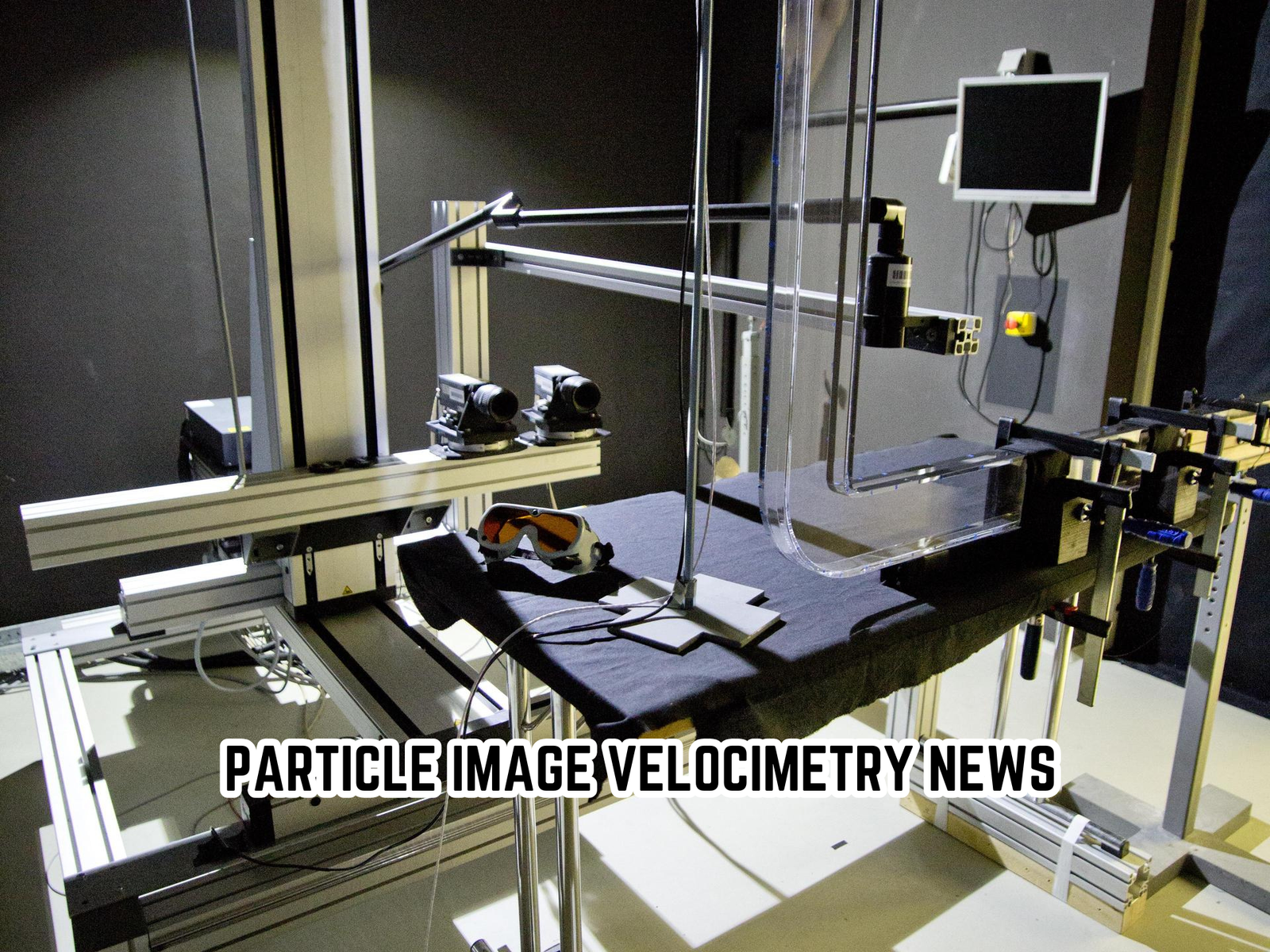
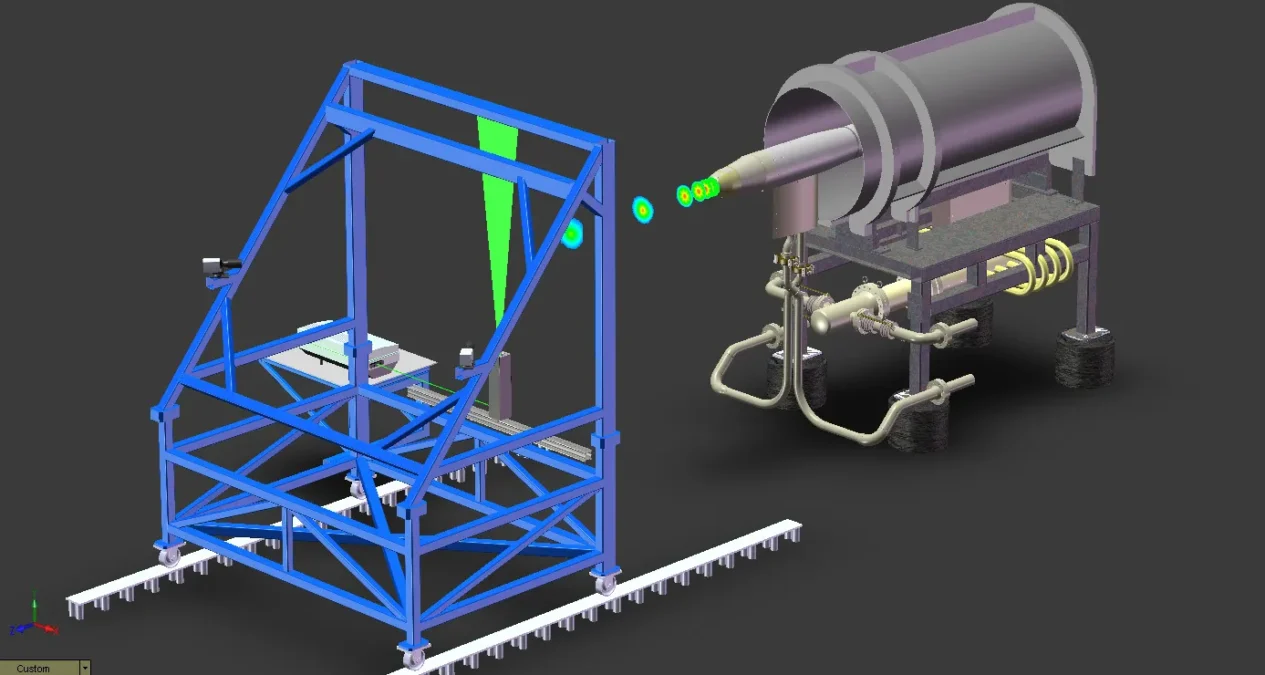
The working process of PIV is both precise and technologically advanced. First, the fluid is seeded with microscopic tracer particles. A laser sheet then illuminates these particles, and a high-speed camera captures their movement across a specific region.
Specialized software analyzes the captured images and calculates how far each particle moves between frames. This data is then used to create velocity fields that represent fluid motion.
Recent particle image velocimetry news reports highlight that modern systems are now capable of capturing extremely fast flows with high accuracy and resolution. This advancement has made particle image velocimetry news a key topic in both academic research and industrial innovation.
Key Features of Particle Image Velocimetry
| Aspect | Details |
|---|---|
| Name | Particle Image Velocimetry (PIV) |
| Type | Optical flow measurement technique |
| Purpose | To measure and visualize fluid motion |
| Working Method | Laser, tracer particles, high-speed imaging |
| Output | Velocity fields and flow maps |
| Main Applications | Aerospace, automotive, biomedical, environmental |
| Advantage | Non-intrusive full-field measurement |
| Limitation | High cost and complex setup |
| Future Trend | AI-based real-time flow analysis |
This table summarizes why particle image velocimetry news continues to grow in relevance across multiple industries.
Importance in Scientific Research
One major reason particle image velocimetry news is widely discussed is its importance in scientific discovery and engineering design. It allows researchers to study turbulence, airflow patterns, and liquid movement in great detail.
In aerospace engineering, particle image velocimetry news often focuses on improving aircraft performance by analyzing aerodynamic flow over wings and engine components. In biomedical science, particle image velocimetry news highlights research into blood circulation, heart valve function, and respiratory airflow.
Because of its precision, particle image velocimetry news plays a critical role in both theoretical research and practical applications.
Recent Technological Developments
Modern particle image velocimetry news frequently reports breakthroughs in artificial intelligence and machine learning integration. These technologies help improve particle tracking accuracy, reduce noise, and process large datasets more efficiently.
Another major highlight in particle image velocimetry news is the development of 3D and time-resolved imaging systems. These advanced systems allow researchers to observe fluid motion in three dimensions and in real time.
As a result, particle image velocimetry news now reflects a shift from simple imaging methods to highly intelligent, automated analysis systems.
Industrial Applications
In industrial sectors, particle image velocimetry news shows how companies are using this technology for design optimization and performance testing.
Automotive engineers use PIV to study airflow around vehicles to improve aerodynamics and fuel efficiency. Aerospace companies rely on insights from particle image velocimetry news to enhance aircraft safety and performance.
Environmental scientists also depend on findings reported in particle image velocimetry news to track water currents, pollution movement, and atmospheric flow patterns.
Biomedical Applications
One of the fastest-growing areas covered in particle image velocimetry news is biomedical engineering. Researchers use PIV to study blood flow inside arteries, heart chambers, and microvascular systems.
This allows early detection of cardiovascular diseases and helps in designing better medical devices. Because of these benefits, particle image velocimetry news is becoming increasingly important in healthcare innovation and diagnostic research.
Challenges in the Field
Despite its advantages, particle image velocimetry news also highlights several challenges. The equipment used in PIV systems is expensive, and the setup requires high precision alignment.
Data processing can also be complex and time-consuming due to large image datasets. Even so, particle image velocimetry news shows continuous progress in reducing these limitations through automation and improved software algorithms.
Future Trends
Future particle image velocimetry news suggests that artificial intelligence, automation, and miniaturization will shape the next generation of PIV systems.
Researchers expect faster processing speeds, portable devices, and even nanoscale applications in the coming years. The increasing frequency of particle image velocimetry news in scientific publications clearly indicates that this field will continue to expand rapidly.
Conclusion
In conclusion, particle image velocimetry news reflects the continuous evolution of one of the most important tools in fluid dynamics. From aerospace engineering to biomedical research, its applications are wide and growing every year.
As technology advances, particle image velocimetry news will continue to report new discoveries, smarter systems, and more efficient measurement techniques. This ensures that PIV will remain a core technology in both scientific research and industrial innovation for years to come.