

Introduction
In the modern automotive world, efficiency and performance are no longer separate goals—they must work together. One of the key technologies that made this possible is turbocharging. Among the companies that shaped this field, Honeywell Turbo Technologies stands out as a major contributor.
For decades, Honeywell Turbo Technologies has been associated with advanced turbocharger systems designed to improve engine power while reducing fuel consumption and emissions. From everyday passenger vehicles to high-performance racing machines, its engineering influence can be seen across the global automotive industry.
The evolution of Honeywell Turbo Technologies is closely tied to changing environmental regulations and the growing demand for smaller yet more powerful engines. Its innovations helped redefine how engines breathe, burn fuel, and perform under pressure.
Origins and Industrial Growth
The story of Honeywell Turbo Technologies begins as part of Honeywell International’s expansion into automotive and aerospace engineering solutions. As fuel efficiency standards tightened in Europe, North America, and Asia, manufacturers needed a solution that could deliver more power from smaller engines.
Turbocharging became that solution, and Honeywell Turbo Technologies emerged as a leader in refining and scaling this concept for mass production. Its engineering teams focused on durability, thermal efficiency, and precision airflow management.
Over time, the company’s turbocharger division became closely linked with the well-known Garrett brand, which eventually evolved into Garrett Motion after restructuring. Even after this change, the legacy of Honeywell Turbo Technologies continues to influence modern turbocharger design worldwide.
How Turbocharging Works in Real Engines
To understand the importance of Honeywell Turbo Technologies, it is necessary to understand the basic function of a turbocharger.
A turbocharger uses exhaust gases that would normally be wasted. These gases spin a turbine connected to a compressor. The compressor forces more air into the engine’s combustion chamber. More air means more fuel can be burned efficiently, resulting in increased power output.
This system allows smaller engines to behave like larger ones without increasing fuel consumption significantly. It is one of the most effective engineering solutions developed in the last century for balancing performance and efficiency.
The refinement of this process by Honeywell Turbo Technologies helped make turbocharging reliable for everyday use, not just performance racing.
Engineering Innovation and Design Philosophy
One of the defining strengths of Honeywell Turbo Technologies is its focus on precision engineering. Turbochargers must operate under extreme conditions, including very high temperatures and rotational speeds that exceed 200,000 RPM in some cases.
To handle these conditions, the company developed advanced materials, aerodynamic compressor designs, and heat-resistant turbine systems. These improvements allowed turbochargers to become more durable and responsive.
Another important aspect of Honeywell Turbo Technologies is its focus on reducing turbo lag—the delay between pressing the accelerator and receiving engine boost. Through improved turbine geometry and electronic control systems, response times were significantly improved, making driving smoother and more predictable.
| Feature | Details |
|---|---|
| Name | Honeywell Turbo Technologies |
| Industry | Automotive & Engineering |
| Specialty | Turbocharger Systems |
| Parent Company | Honeywell International Inc. (historical division) |
| Successor Brand | Garrett Motion |
| Main Use | Engine performance & efficiency improvement |
| Products | Turbochargers for cars, trucks, and industrial engines |
| Purpose | Increase power, reduce fuel consumption, lower emissions |
Role in Automotive Industry
The automotive sector has been the largest beneficiary of Honeywell Turbo Technologies innovations. Modern passenger vehicles from brands in Europe, Asia, and America rely heavily on turbocharged engines to meet emission regulations without sacrificing performance.
Smaller engines, such as 1.0L or 1.5L turbocharged units, can now produce power levels that previously required much larger engines. This shift has helped manufacturers reduce vehicle weight, improve fuel economy, and comply with stricter environmental standards.
Many diesel engines in commercial vehicles also rely on turbocharging systems developed under Honeywell Turbo Technologies, especially in trucks and long-haul transportation where torque and efficiency are essential.
Impact on Motorsports and Ferrari F1
High-performance racing has always been a testing ground for advanced engineering, and Honeywell Turbo Technologies has played a role in this area as well. Turbocharger systems influenced by its technology have been used in Formula One and other racing categories.
In collaboration with performance engineering partners, turbo systems contributed to improving airflow efficiency in racing engines, where even the smallest gain can make a significant difference in lap times.
Ferrari and other F1 teams have historically worked with advanced turbocharging suppliers and engineering partners to extract maximum performance. In such environments, Honeywell Turbo Technologies became associated with precision airflow control, heat management, and rapid response systems essential for racing conditions.
Spin-Off and Industry Evolution
Over time, the automotive turbocharger business originally associated with Honeywell was restructured into a separate company known as Garrett Motion. This transition allowed the turbocharger division to operate independently while continuing its technological legacy.
Despite the separation, the foundation built by Honeywell Turbo Technologies remains central to modern turbocharger engineering. Many of the design principles, testing methods, and manufacturing techniques developed during its Honeywell era continue to shape current products.
This evolution reflects how large engineering divisions adapt to changing industrial demands while maintaining continuity in technology development.
Benefits of Turbocharger Technology
The widespread adoption of turbocharging is largely due to the advantages refined by Honeywell Turbo Technologies over the years.
One of the most important benefits is improved engine efficiency. By using exhaust gases that would otherwise be wasted, turbochargers increase the energy output of an engine without significantly increasing fuel consumption.
Another key advantage is reduced emissions. As governments worldwide enforce stricter environmental laws, turbocharged engines help manufacturers meet these requirements.
Performance improvement is another major benefit. Vehicles equipped with turbochargers provide better acceleration and torque, especially at lower engine sizes. This combination of power and efficiency is one of the reasons turbocharging has become a standard in modern engineering.
Global Market Influence
The influence of Honeywell Turbo Technologies extends beyond automobiles. Its engineering concepts are used in marine engines, construction machinery, agricultural equipment, and power generation systems.
Industries that require continuous and efficient power output rely heavily on turbocharged systems. This includes heavy-duty applications where engine reliability is critical.
By improving combustion efficiency and reducing energy waste, Honeywell Turbo Technologies contributed to making industrial operations more sustainable and cost-effective.
Future of Turbocharging Technology
The future of turbocharging is closely tied to hybrid and electrified powertrains. Even as electric vehicles grow in popularity, turbocharged engines remain important in hybrid systems where internal combustion engines still play a role.
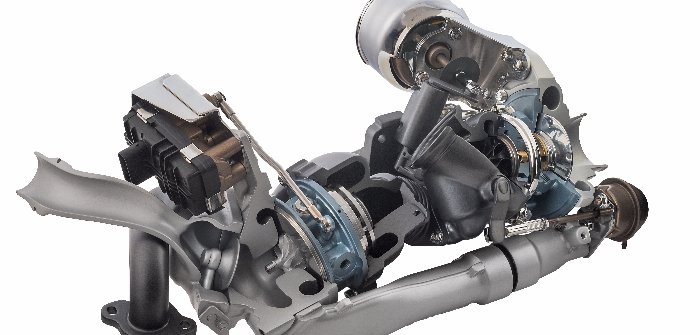
Research continues into electric-assisted turbochargers, which combine traditional exhaust-driven turbines with electric motors to eliminate lag completely. This direction represents the next phase of evolution influenced by Honeywell Turbo Technologies engineering principles.
In addition, advancements in materials such as ceramic turbines and lightweight alloys are expected to further improve efficiency and durability.
Company Profile Overview
Honeywell Turbo Technologies is not a typical consumer-facing brand, so personal attributes like age, height, family, or social media presence do not apply. Instead, its identity is defined by industrial and corporate characteristics.
Founded as part of Honeywell International’s engineering divisions, it operated primarily in the automotive and industrial turbocharging sector. Its headquarters and operations were integrated within Honeywell’s global engineering network before the turbocharger business evolved into Garrett Motion.
The company’s “value” is not measured in personal net worth but in technological contribution, global market influence, and industrial adoption. Its engineering legacy continues to be recognized across multiple continents.
Conclusion
The story of Honeywell Turbo Technologies is essentially the story of modern turbocharging itself. From early engineering challenges to today’s highly efficient and compact engines, its influence has shaped how the world thinks about automotive performance and sustainability.
By turning wasted exhaust energy into usable power, it changed the fundamentals of engine design. Whether in passenger cars, heavy-duty trucks, or racing environments, the legacy of Honeywell Turbo Technologies remains deeply embedded in modern mechanical engineering.
As the automotive industry moves toward hybrid and electrified systems, the principles developed by Honeywell Turbo Technologies will continue to play a crucial role in shaping the next generation of efficient and powerful engines.